

How French Bonus CRS Points and CLB 5 English Can Add 50 Express Entry Points

A strong French test result can do more than improve the language section of an Express Entry profile. It can unlock a separate bilingual bonus worth up to 50 extra CRS points, which is often enough to change the shape of a candidate’s strategy.
That is the power of French in the Comprehensive Ranking System, or CRS. English and French scores already affect core language points, skill transferability, and programme eligibility. The French-language bonus sits on top of that. For bilingual candidates, it is one of the cleanest ways to raise a CRS score without changing age, education, work history, or family status.
The key formula is simple:
Reach NCLC 7 or higher in all four French abilities, then pair it with the right English level to claim either 25 or 50 additional CRS points.
This article is informational only and is not immigration advice. CRS rules can change, so always check the latest official requirements before submitting a profile or test results.

The bilingual bonus is separate from your regular language score
Express Entry awards CRS points in several categories. Language is one of the most important because it appears in more than one place.
A candidate may receive points for:
First official language ability
Second official language ability
Skill transferability combinations
Additional French-language proficiency points
The bilingual bonus belongs to the additional points section. That matters because it does not replace your normal language points. It adds to them.
For French-speaking or bilingual candidates, this creates a layered advantage. A strong French score can support eligibility, raise core CRS points, help with second-language scoring, and then trigger the French-language bonus.
This is why French bonus CRS points Express Entry planning should not be treated as a side issue. For the right candidate, it may be the fastest realistic path to a stronger profile.
The 50-point formula is clear
To receive the maximum French-language bonus under Express Entry, a candidate needs two things:
NCLC 7 or higher in French
This must be achieved in all four abilities:
Speaking
Listening
Reading
Writing
Speaking
Listening
Reading
Writing
CLB 5 or higher in English
This must also be achieved in each English ability:
When both conditions are met, the candidate may receive 50 additional CRS points for French-language proficiency.
If the candidate reaches NCLC 7 or higher in French but has English below CLB 5, or has no English test, the bonus is lower. In that case, the candidate may receive 25 additional CRS points.
That gives bilingual candidates a very practical target. French does the heavy lifting, but English can decide whether the bonus is 25 or 50.
The difference between 25 and 50 points can be decisive
The gap between the two bonus levels is 25 CRS points. In Express Entry terms, that is not a small adjustment. It can equal or exceed the value of major life changes that are much harder to control.
A candidate cannot become younger. A candidate cannot quickly add years of skilled work experience. A second degree may take years. Canadian work experience usually requires time, eligibility, and planning.
By contrast, raising English to CLB 5 may be far more achievable for someone who already has functional English. That is why the combination of CLB 5 English NCLC 7 French deserves close attention.
The English requirement for the 50-point bonus is not CLB 9. It is not expert-level English. It is CLB 5 in each English ability. For many bilingual candidates, that may be within reach with a focused test plan.
The strategic question becomes:
If French is already strong or close to NCLC 7, how much effort would it take to secure CLB 5 English in all four abilities?
For some candidates, the answer may be weeks or months, not years.

NCLC 7 is the French threshold to watch
The bonus is built around NCLC 7 in French. NCLC stands for Niveaux de compétence linguistique canadiens, the French-language equivalent used for Canadian language benchmarks.
For TEF Canada, the NCLC 7 minimum scores are commonly understood as:
French ability | TEF Canada score needed for NCLC 7 |
Speaking | 310 |
Listening | 249 |
Reading | 207 |
Writing | 310 |
These scores must be met in all four abilities. A high score in reading cannot compensate for a lower score in listening. The system looks at each ability separately.
That is where many candidates misread their position. A candidate may feel fluent in French because they speak well at work or studied in French. Yet the bonus depends on balanced test performance. The writing score and listening score can be especially important because they often expose gaps that daily conversation does not.
If one ability falls below NCLC 7, the French-language bonus may not apply. The goal is not “good French” in general. The goal is NCLC 7 or higher across the board.
English at CLB 5 is the multiplier
Once French reaches NCLC 7 in all four areas, English becomes the multiplier.
Here is the bonus structure in plain terms:
French level | English level | Additional CRS points |
NCLC 7 or higher in all four French abilities | CLB 5 or higher in all four English abilities | 50 |
NCLC 7 or higher in all four French abilities | Below CLB 5 in English, or no English test | 25 |
Below NCLC 7 in one or more French abilities | Any English level | 0 French-language bonus |
This table shows why English should not be ignored by French-dominant candidates.
A candidate may think, “My French is the main advantage, so I will only focus on French.” That may leave 25 points unused. If English is already around CLB 4 or CLB 5, a targeted English plan could produce a much larger CRS gain than another broad French review.
The smarter approach is to map both languages together. French unlocks the door. English determines whether the room contains 25 points or 50.
Compare the 50-point bonus with slower CRS gains
The 50-point French-language bonus is powerful because it may compete with changes that usually require much more time.
A candidate may improve CRS through education, work experience, language, job offers, provincial nomination, family factors, or Canadian study. Some of these routes can be valuable, but many are slow, uncertain, or outside the candidate’s direct control.
Here is a practical comparison:
CRS improvement path | Typical challenge | Why the French bonus stands out |
Additional degree | Takes time, tuition, and formal admission | Language preparation may be faster |
More work experience | Requires months or years | Test scores can change sooner |
Canadian work experience | Requires status, employment, and time in Canada | French and English tests can be planned from abroad |
Provincial nomination | Depends on programme rules and invitations | Language results remain under the candidate’s control |
Higher English only | May require advanced CLB levels for bigger gains | CLB 5 English can activate the full French bonus |
This does not mean language study is easy. NCLC 7 French requires serious preparation. Writing and listening, in particular, demand practice under test conditions.
But compared with adding new credentials or waiting for more work history, the bonus is unusually direct. It rewards a skill that can be trained, measured, and submitted.
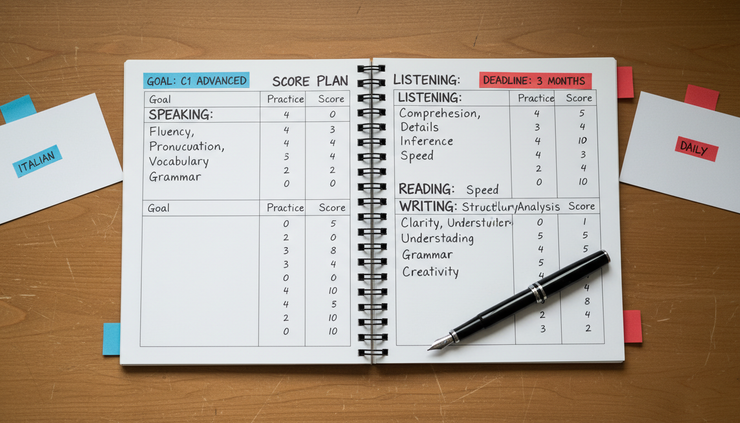
Build the score plan around the weakest ability
The French bonus is only as strong as the lowest score among the four abilities. That should shape preparation.
A candidate aiming for NCLC 7 should avoid spending all study time on the easiest section. If speaking is already above the target but writing is fragile, extra speaking practice may feel good, but it does not protect the bonus.
A better plan starts with a score audit.
Check where French is closest to the line
Use recent practice results, teacher feedback, or diagnostic tests to identify the risk area.
Ask:
Which French ability is below NCLC 7 today?
Which ability is just above the minimum and still risky?
Which test format causes the most mistakes?
Are errors caused by language skill, timing, or misunderstanding the task?
The answer may be different for each candidate. Some French speakers lose marks in structured writing because they do not organise ideas clearly. Others struggle with listening because the audio speed, accents, or question style feels unfamiliar.
Treat writing as a scoring discipline
Writing is not only about vocabulary. It is also about structure, grammar control, tone, and task completion.
For NCLC 7, preparation should include:
Timed writing practice
Clear paragraph structure
Connectors that sound natural
Review of recurring grammar mistakes
Practice with the expected task types
A candidate who speaks French well may still need writing-specific training. Spoken fluency does not automatically produce a strong written response under exam pressure.
Train listening with test-style audio
Listening ability can be deceptive. Daily conversations allow visual clues, repetition, and context. A test does not always give those supports.
Listening practice should include:
Audio at natural speed
Different French accents
Note-taking under time pressure
Review of wrong answers
Repeated exposure to test-style questions
The goal is not only to “understand French”. The goal is to answer accurately in the format used by the exam.
Do not wait until French is perfect to plan English
English preparation can run in parallel with French. This is especially true when the goal is CLB 5.
A candidate who delays English until after the French test may lose time. If French results arrive at NCLC 7 or higher, the candidate may then need a second preparation cycle to secure CLB 5 English. That delays the full 50-point gain.
A simple parallel plan works better:
Keep French as the main project if it is not yet at NCLC 7
Add light but steady English practice each week
Take an English diagnostic early
Focus on any ability below CLB 5
Book the English test only when practice scores are stable
This approach reduces surprises. It also helps candidates avoid the frustrating outcome of earning strong French scores but missing the full bonus because English was left untested or underprepared.
Calculate the return before choosing your next move
The bilingual bonus should be compared with other CRS improvement options before committing time and money.
Start with three numbers:
Current CRS score
Estimated CRS score with NCLC 7 French and no CLB 5 English
Estimated CRS score with NCLC 7 French and CLB 5 English
The difference between the second and third number shows the English effect. The difference between the first and third number shows the full bilingual gain.
Then compare that gain with other possible actions.
For example, if a candidate can gain 50 additional points through French and English testing, that may outrank a slower plan to start another academic credential. If French is already near NCLC 7, the return may be even stronger.
The best CRS strategy is not always the most dramatic one. Often, it is the one that converts existing ability into recognised test results.

Use the right course path for the score you need
For bilingual candidates, the goal is not vague improvement. The goal is a measurable result: NCLC 7 or higher in French, plus CLB 5 or higher in English if the full 50-point bonus is the target.
That kind of goal needs a structured plan. General study can help, but test-focused preparation usually works better because the CRS bonus depends on exact scores.
A strong course path should cover:
Diagnostic testing before the study plan begins
Separate work on speaking, listening, reading, and writing
Practice under timed conditions
Feedback on writing and speaking
Score tracking against NCLC and CLB targets
A booking plan for French and English tests
Le Sommet or Le Grand Duo can fit candidates who want focused preparation for this bilingual advantage. The right choice depends on where the current scores stand, how much support is needed, and whether both French and English should be strengthened together.
The 50 points are a strategy, not a bonus to leave to chance
The French-language bonus is one of the most valuable point opportunities in Express Entry for bilingual candidates. The mathematics are simple, but the execution must be precise.
To reach the full bonus:
Secure NCLC 7 or higher in all four French abilities
Secure CLB 5 or higher in all four English abilities
Submit valid test results through the Express Entry profile
Track each ability separately, not just the overall language level
Those 50 extra CRS points can have the practical weight of a major profile upgrade. For many candidates, the path is faster than adding another degree or waiting years for extra experience.
A bilingual profile already has hidden value. The next step is to turn that ability into verified scores that the CRS can count.


Comments